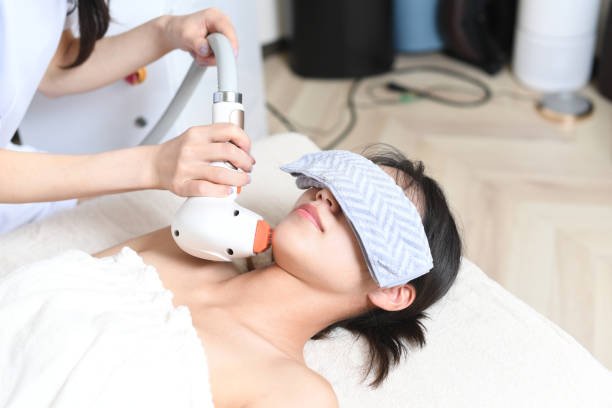

Laser skin resurfacing has revolutionized dermatology by offering precise, controlled skin remodeling. With advances in fractional CO₂, Erbium, and Pico lasers, patients now have options for everything from minor texture improvements to significant wrinkle and scar reduction.
This guide will break down the types of laser treatments, what each does, ideal candidates, procedure expectations, recovery, risks, and how to choose the best laser for your skin goals.
1. How Laser Resurfacing Works
Laser treatments work by targeting skin layers with concentrated energy to remove damaged cells and stimulate collagen. Different lasers penetrate to varying depths, allowing for customization.
Mechanism
- Ablative lasers: Remove epidermis and heat dermis → stimulates collagen and tightening
- Non-ablative lasers: Heat dermis without removing skin → minimal downtime
- Fractional lasers: Deliver micro-columns of energy → faster healing + targeted results
2. Fractional CO₂ Laser
- Ablative laser, penetrates deeply into dermis
- Ideal for: deep wrinkles, scars, texture irregularities, severe sun damage
- Downtime: 7–14 days
- Recovery: Redness may persist 2–3 months
- Sensation: Burning/tingling during procedure
- Risks: Hyperpigmentation, prolonged redness, infection
3. Erbium Laser
- Ablative, but less deep than CO₂
- Ideal for: moderate wrinkles, pigmentation, mild scars
- Shorter downtime than CO₂ (5–7 days)
- Slightly less dramatic results
- Lower risk of PIH for darker skin types
4. Pico Laser
- Non-ablative, ultra-short pulses
- Ideal for: pigmentation, sunspots, tattoos, mild skin rejuvenation
- Minimal downtime
- Works via photoacoustic effect → breaks pigment without heating surrounding tissue
- Often combined with topical lightening agents
5. Choosing the Right Laser
- Deep wrinkles & scars: Fractional CO₂
- Moderate aging & pigmentation: Erbium
- Surface pigment & tattoo removal: Pico
- Darker skin: Non-ablative or Erbium preferred
6. Treatment Preparation & Aftercare
- Avoid sun 2–4 weeks prior
- Pre-treatment skin conditioning may be recommended
- Post-laser: gentle cleansers, hydrating ointments, SPF 50+
- Avoid retinoids until skin fully heals
7. Results Timeline
- Non-ablative: gradual improvement over 3–6 months
- Fractional CO₂: visible changes in 2–4 weeks, collagen remodeling over 6 months
- Pico: pigment reduction in 1–3 sessions
8. Risks & Safety
- Redness, swelling, peeling
- Infection (rare)
- PIH (especially in darker skin types)
- Scarring (rare, mainly with aggressive CO₂ treatments)
9. Cost
- Fractional CO₂: $1,500–$4,500 per session
- Erbium: $1,000–$3,000
- Pico: $500–$1,500